In an era defined by technological acceleration and global challenges, the selection of the world's top ten engineering achievements stands as a testament to human ingenuity and its tangible impact on civilization. These are not merely blueprints or theoretical marvels; they are solutions that have been forged in the crucible of real-world application, demonstrating measurable effectiveness and profound benefits to societies worldwide. The criteria for such recognition hinge on a project's ability to transcend conceptual brilliance and deliver verified, scalable results.
The process of identifying these pinnacles of engineering is rigorous and multifaceted. It involves a global consortium of experts from academia, industry, and policy-making bodies. Their evaluation extends beyond technical sophistication to encompass the project's resilience, its economic viability, its environmental footprint, and, most critically, its proven capacity to solve a pressing human or planetary need. This focus on practically validated outcomes ensures that the accolades are bestowed upon endeavors that have moved from the drawing board to active, beneficial deployment.
Among the most celebrated achievements in recent memory is the rapid development and global deployment of mRNA vaccine platforms. While the science behind messenger RNA had been in development for decades, it was the unprecedented challenge of the COVID-19 pandemic that served as its ultimate validation. The engineering feat was not just in the biochemical design but in the monumental logistical undertaking. This involved creating entirely new supply chains for ultra-cold storage, scaling up production to billions of doses, and ensuring global distribution under immense time pressure. The result was a technology that proved its efficacy in billions of arms, fundamentally altering the course of a global health crisis and establishing a new paradigm for rapid response to emerging pathogens.
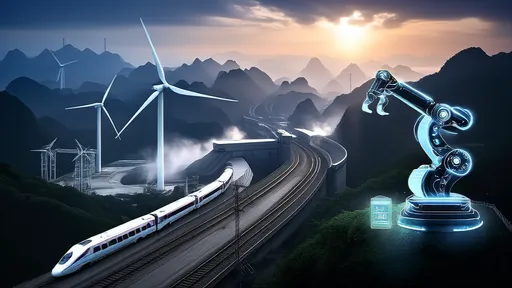
Another landmark achievement is the continued expansion and refinement of high-speed rail networks, particularly in Asia and Europe. These systems represent a masterclass in integrated engineering, combining advances in metallurgy, aerodynamics, power electronics, and civil engineering. The validation of their success is clear: they have dramatically reduced travel times between major urban centers, decongested air and road traffic, and provided a significantly more energy-efficient mode of mass transportation. The Shinkansen in Japan and the rapidly expanding network in China are prime examples, where these trains have become the backbone of national mobility, their reliability and safety records meticulously proven over billions of passenger-kilometers.
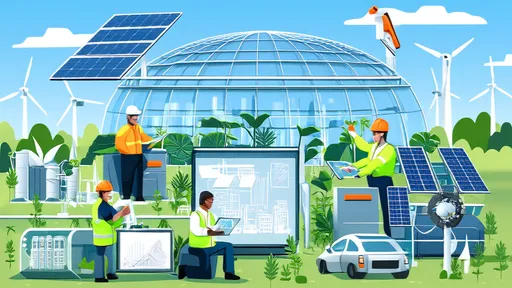
The revolution in renewable energy infrastructure, specifically in solar and wind power, also claims a prominent spot. The engineering journey here has been one of relentless optimization and cost reduction. From improving the photovoltaic efficiency of solar panels to designing massive offshore wind turbines capable of withstanding extreme marine environments, the progress is undeniable. The validation is in the data: the levelized cost of energy from these sources has plummeted, making them competitive with, and often cheaper than, fossil fuels in many markets. This economic viability, coupled with their zero-operational-emissions benefit, demonstrates a successful engineering solution to the dual challenges of energy security and climate change.
In the digital realm, the global rollout of 5G communication networks represents a transformative engineering milestone. This goes far beyond merely faster internet speeds on mobile phones. 5G's low latency and high device density enable a new ecosystem of technologies, from autonomous vehicles and smart grids to remote surgery and the industrial Internet of Things (IoT). The practical validation is emerging in pilot cities and specialized industries, where real-time data exchange is enabling levels of automation and efficiency previously unimaginable. While the full societal impact is still unfolding, the foundational infrastructure is being laid, proving its technical capability in controlled, large-scale environments.
The field of civil engineering continues to produce validated marvels, such as the development of super-tall skyscrapers that incorporate advanced seismic damping systems. In seismically active regions like Japan and Taiwan, these buildings are not just architectural statements; they are life-saving structures. Their engineering validation comes not from simulations alone, but from their proven performance during actual earthquakes. The use of tuned mass dampers and base isolation systems has allowed these towers to sway safely rather than collapse, protecting inhabitants and preserving critical infrastructure. This is engineering efficacy tested and confirmed by the most unforgiving of forces: nature itself.
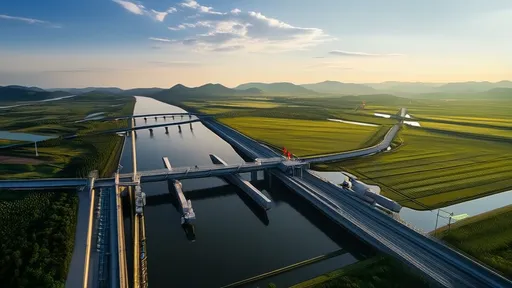
Furthermore, large-scale water management projects, such as the modern desalination plants in the Middle East and sophisticated wastewater recycling facilities in water-stressed regions like Singapore, showcase engineering that directly addresses resource scarcity. The technology behind reverse osmosis has been honed to a point where it can reliably transform seawater or sewage into potable water for millions. The success of these projects is validated by their continuous operation, providing a dependable water supply that supports urban growth and agricultural needs in arid environments, thereby preventing conflict and fostering stability.
These examples collectively underscore a critical paradigm in modern engineering: the shift from what is possible in theory to what is proven in practice. The world's top engineering achievements are those that have undergone this baptism by fire. They have been stress-tested by market forces, real-world environmental conditions, and the complex demands of human use. Their legacy is not just in the steel, concrete, or code they are made of, but in the verified improvements to quality of life, economic productivity, and environmental sustainability they deliver. As humanity faces ever more complex challenges, from climate adaptation to deep-space exploration, this unwavering focus on practical, validated results will continue to be the true measure of engineering greatness.
By /Oct 21, 2025
By /Oct 20, 2025
By /Oct 20, 2025

By /Oct 21, 2025

By /Oct 20, 2025

By /Oct 21, 2025

By /Oct 21, 2025

By /Oct 21, 2025
By William Miller/Oct 20, 2025

By /Oct 21, 2025
By /Oct 21, 2025

By /Oct 20, 2025
By /Oct 20, 2025
By /Oct 21, 2025
By /Oct 20, 2025
By /Oct 21, 2025
By Joshua Howard/Oct 20, 2025
By /Oct 21, 2025
By /Oct 21, 2025
By /Oct 20, 2025