In an unprecedented move that signals both urgency and opportunity, the global engineering community is issuing a clarion call for collaboration at a scale and speed never before witnessed in human history. This is not merely a suggestion for increased cooperation; it is a fundamental recognition that the complex, interconnected challenges of the 21st century—from climate change and resource scarcity to pandemics and digital transformation—cannot be solved by any single nation, corporation, or discipline working in isolation. The very fabric of modern civilization, built and maintained by engineers, is under strain, demanding a response that is equally sophisticated and unified.
The impetus for this call to action is multifaceted, rooted in a confluence of crises that have exposed the vulnerabilities of our global systems. The recent pandemic served as a stark, real-time demonstration of how a biological threat could paralyze supply chains, overwhelm healthcare infrastructure, and disrupt economies worldwide. Concurrently, the escalating impacts of climate change—seen in intensifying wildfires, historic floods, and persistent droughts—have made it clear that incremental improvements to our energy, transportation, and agricultural systems are no longer sufficient. These are not regional problems with local solutions; they are systemic issues that require a complete re-imagining of how we design, build, and manage the world. The engineering community, as the primary architect of our built environment, feels a profound responsibility to lead this transformation.
What distinguishes this moment from past calls for international cooperation is the sheer velocity at which action is required. The timelines dictated by climate science and resource depletion are unforgiving. We are no longer operating with the luxury of decades-long development cycles. The need is for rapid prototyping, deployment, and iterative improvement of solutions on a global canvas. This demands a break from traditional, siloed research and development practices. It requires the creation of dynamic, open-source platforms where engineers from Boston to Bangalore can simultaneously contribute to designing a more efficient battery, a more resilient water purification system, or a smarter electrical grid. The model is shifting from competitive secrecy to collaborative acceleration.
At the heart of this new collaborative paradigm is the breaking down of disciplinary barriers. The most promising solutions will not emerge solely from civil, mechanical, or electrical engineering. They will be born at the intersection of these fields with biology, data science, social sciences, and materials science. Imagine a project where structural engineers, microbiologists, and AI specialists work in concert to develop self-healing concrete that repairs its own cracks, significantly extending the lifespan of critical infrastructure while reducing maintenance costs and material waste. This level of innovation is only possible through deep, sustained collaboration across fields that have historically operated in separate spheres.
The scale of the proposed collaboration is as critical as its speed. We are talking about mobilizing millions of engineers across the planet, leveraging their collective intelligence through digital networks that operate in real-time. This involves creating global consortia focused on specific grand challenges, such as achieving net-zero carbon emissions or providing universal access to clean water. These would not be mere talking shops; they would be action-oriented alliances with shared data pools, standardized protocols, and common goals. They would empower a small team in Chile to build upon a breakthrough from a research institute in Norway, which in turn incorporates feedback from field tests in Indonesia, creating a virtuous cycle of innovation that compounds its impact.
Of course, this vision is not without its formidable obstacles. Intellectual property rights, long the engine of commercial innovation, present a significant hurdle. How do companies protect their investments while contributing to a global commons? New models of licensing and profit-sharing must be developed. National security concerns also loom large, as critical infrastructure technologies could be deemed sensitive. Furthermore, vast disparities in technological access and engineering capacity between nations risk creating a new form of collaborative divide, where only the most developed countries can meaningfully participate. Addressing these issues requires not just technical skill, but diplomatic and political innovation.
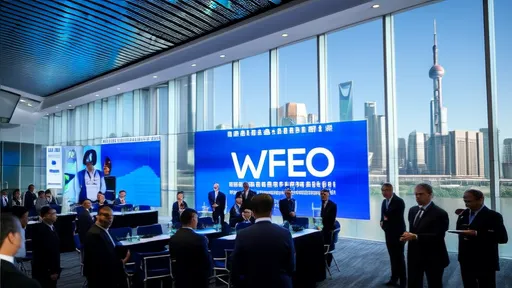
Despite these challenges, the momentum is building. Major professional engineering bodies, including the World Federation of Engineering Organizations (WFEO) and The Institution of Civil Engineers (ICE), are already formulating frameworks for this new era of cooperation. They are advocating for the establishment of international engineering "rapid response" teams that can be deployed to assist with crises anywhere in the world, from natural disasters to infrastructure failures. Simultaneously, corporate giants in the technology and industrial sectors are beginning to see the strategic value in pre-competitive collaboration on foundational technologies that benefit the entire ecosystem, recognizing that a stable, sustainable planet is ultimately better for business.
The call from the global engineering community is therefore a historic pivot. It is an admission that the old ways are inadequate for the new reality. It is a commitment to pool human ingenuity on a planetary scale to safeguard our common future. The success of this endeavor will not be measured by a single patent or a solitary project, but by the resilience of our societies and the health of our planet for generations to come. The engineers of the world are ready to collaborate. The question that remains is whether the political and economic systems of the world are ready to support them.
By /Oct 21, 2025
By /Oct 20, 2025

By /Oct 20, 2025

By /Oct 21, 2025

By /Oct 20, 2025

By /Oct 21, 2025

By /Oct 21, 2025

By /Oct 21, 2025
By William Miller/Oct 20, 2025

By /Oct 21, 2025
By /Oct 21, 2025
By /Oct 20, 2025
By /Oct 20, 2025
By /Oct 21, 2025
By /Oct 20, 2025
By /Oct 21, 2025

By Joshua Howard/Oct 20, 2025

By /Oct 21, 2025
By /Oct 21, 2025

By /Oct 20, 2025