The year 2025 marks a watershed moment in human engineering history, as the global scientific community unveils its selection of the world's most groundbreaking engineering achievements. These remarkable feats represent not merely incremental improvements but fundamental shifts in how humanity addresses its most pressing challenges. From quantum computing's leap into practical application to biotechnology's revolutionary approaches to healthcare, these accomplishments demonstrate engineering's evolving role as the primary driver of human progress.
Quantum Computing Reaches Commercial Viability
The long-anticipated era of practical quantum computing has finally arrived, with systems now demonstrating unprecedented stability and computational power. What sets the 2025 quantum systems apart is their ability to maintain quantum coherence for extended periods, enabling complex calculations that were previously theoretical. Pharmaceutical companies are leveraging these capabilities to simulate molecular interactions at an atomic level, dramatically accelerating drug discovery processes. Financial institutions have implemented quantum algorithms for risk assessment and portfolio optimization, while logistics companies are solving routing problems that would take classical computers centuries to process.
What makes this achievement particularly noteworthy is the engineering breakthrough in error correction and qubit stability. Researchers have developed novel approaches to quantum decoherence, essentially creating systems that can self-correct during computation. The engineering teams behind these systems have managed to maintain quantum states at temperatures approaching absolute zero while developing sophisticated control systems that manipulate qubits with extraordinary precision. This represents not just a computational advancement but a masterpiece of systems engineering, integrating cryogenics, precision manufacturing, and advanced control software into a cohesive whole.
Artificial General Intelligence Systems Demonstrate Human-Level Reasoning
The emergence of artificial general intelligence systems capable of human-level reasoning across multiple domains represents perhaps the most profound engineering achievement of our time. Unlike specialized AI systems, these AGI platforms demonstrate contextual understanding, abstract reasoning, and creative problem-solving abilities that mirror human cognitive processes. The engineering challenge overcome here was monumental – creating neural architectures that can simultaneously process diverse data types while maintaining coherent reasoning across domains.
These systems are already transforming scientific research, education, and creative industries. Research institutions report AGI systems making genuine scientific discoveries by identifying patterns across disparate research domains. In education, personalized AGI tutors adapt to individual learning styles while understanding emotional cues. The engineering breakthrough lies in the novel architecture that enables continuous learning without catastrophic forgetting, allowing these systems to accumulate knowledge while maintaining performance across all previously learned tasks.
Fusion Energy Breakthrough Delivers Sustainable Power
After decades of research, fusion energy has transitioned from experimental curiosity to practical power generation. The 2025 fusion reactors have achieved sustained energy production with net positive output, marking the beginning of a new energy era. The engineering innovations enabling this breakthrough include advanced superconducting magnets, novel plasma containment systems, and materials capable of withstanding extreme conditions for extended periods.
The significance of this achievement extends beyond clean energy production. Fusion power promises to address energy poverty while providing the abundant, reliable electricity needed for other technological advancements. The engineering teams have solved numerous challenges, from plasma instability to heat management, through sophisticated control systems and revolutionary material science. These reactors represent the culmination of international collaboration and interdisciplinary engineering excellence.
Advanced Biotechnology Revolutionizes Personalized Medicine
The field of biotechnology has achieved what many considered impossible – truly personalized medical treatments tailored to individual genetic profiles. The engineering accomplishment here lies in the integration of genomic sequencing, AI-driven drug design, and advanced manufacturing systems. These systems can analyze a patient's genetic makeup and produce customized therapies in remarkably short timeframes.
Cancer treatment has been particularly transformed, with engineered immune cells demonstrating unprecedented efficacy against previously untreatable cancers. The manufacturing systems behind these therapies represent engineering marvels, maintaining sterile conditions while handling biological materials with robotic precision. What makes this achievement extraordinary is the scale at which personalized treatments can now be produced, bringing bespoke medicine from theoretical possibility to practical reality.
Next-Generation Space Exploration Systems
Space engineering has entered a new era with systems capable of sustained presence beyond Earth's orbit. The engineering marvels include reusable spacecraft with advanced propulsion systems, orbital manufacturing facilities, and sophisticated life support systems that can maintain human crews for extended missions. These achievements represent the culmination of materials science, propulsion technology, and systems engineering working in concert.
The international lunar base, now permanently occupied, demonstrates engineering solutions to numerous challenges, from radiation protection to resource utilization. Meanwhile, Mars sample return missions have proven the viability of interplanetary transportation systems. The engineering behind these systems emphasizes reliability and redundancy, with multiple backup systems ensuring mission success even when components fail millions of miles from Earth.
Advanced Materials with Programmable Properties
The development of materials with programmable physical properties represents a fundamental shift in materials engineering. These substances can change their characteristics – from flexibility to conductivity to optical properties – based on external stimuli or programmed instructions. The engineering breakthrough involves creating materials with embedded computational capabilities and responsive elements at the molecular level.
Applications range from self-healing infrastructure to adaptive clothing that regulates temperature based on environmental conditions. In construction, programmable materials enable buildings that can adapt to seismic activity or extreme weather. The engineering challenge overcome was creating materials that maintain structural integrity while incorporating responsive elements, achieved through novel manufacturing processes and sophisticated control systems.
Global Neural Network Infrastructure
The establishment of a global neural network infrastructure represents perhaps the most ambitious connectivity project in human history. This achievement goes beyond traditional internet infrastructure, creating a seamless network that integrates terrestrial, orbital, and undersea systems into a unified whole. The engineering challenges included developing new protocols for data transmission, creating robust security systems, and ensuring reliability across diverse environments.
This infrastructure enables real-time global collaboration at unprecedented scales, from scientific research to emergency response. The engineering teams developed novel approaches to network management, creating systems that can self-organize and repair while maintaining security and performance. The achievement represents not just technological advancement but a new paradigm in global connectivity.
Climate Engineering Systems Demonstrate Efficacy
Direct climate intervention systems have moved from theoretical models to operational reality, with engineered solutions demonstrating measurable impact on global climate patterns. These systems include carbon capture facilities operating at industrial scales, atmospheric management systems, and ocean-based carbon sequestration projects. The engineering achievement lies in creating systems that can operate reliably in challenging environments while delivering predictable results.
The carbon capture facilities, in particular, represent engineering masterpieces, processing atmospheric air at unprecedented volumes while minimizing energy consumption. The systems integrate multiple technological approaches, from chemical processes to biological solutions, creating comprehensive approaches to carbon management. What makes this achievement remarkable is the scale of operation and the precision of impact measurement.
Autonomous Urban Mobility Networks
Urban transportation has been transformed by fully autonomous mobility networks that integrate ground, air, and underground systems. The engineering accomplishment involves creating coordination systems that manage thousands of autonomous vehicles simultaneously while ensuring safety and efficiency. These networks represent the integration of advanced sensors, real-time processing systems, and sophisticated AI decision-making algorithms.
The systems have demonstrated remarkable resilience, adapting to changing conditions and maintaining service during emergencies. The engineering teams developed novel approaches to system-wide optimization, creating networks that learn and improve over time. This achievement has transformed urban planning and dramatically reduced transportation-related emissions while improving mobility access.
Advanced Robotics with Human-Level Dexterity
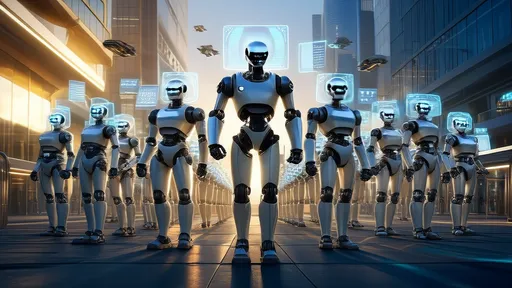
The development of robotic systems with human-level dexterity and situational awareness represents a quantum leap in robotics engineering. These systems can perform complex tasks in unstructured environments, from surgical procedures to disaster response. The engineering breakthrough involves creating systems that integrate advanced sensing, real-time processing, and precise actuation in compact form factors.
These robots demonstrate remarkable adaptability, learning from experience and adjusting to new situations. The engineering teams have solved numerous challenges, from power management to thermal control, creating systems that can operate for extended periods without human intervention. This achievement is transforming numerous industries while creating new possibilities for human-robot collaboration.
The 2025 global engineering achievements collectively represent humanity's growing ability to address complex challenges through technological innovation. What distinguishes these accomplishments is their integrated nature – each represents the convergence of multiple engineering disciplines working in harmony. As these technologies mature and interact, they promise to create synergistic effects that could accelerate human progress in ways we are only beginning to imagine.

By /Oct 21, 2025
By /Oct 20, 2025

By /Oct 20, 2025

By /Oct 21, 2025

By /Oct 20, 2025

By /Oct 21, 2025
By /Oct 21, 2025

By /Oct 21, 2025

By William Miller/Oct 20, 2025

By /Oct 21, 2025

By /Oct 21, 2025

By /Oct 20, 2025
By /Oct 20, 2025
By /Oct 21, 2025
By /Oct 20, 2025

By /Oct 21, 2025

By Joshua Howard/Oct 20, 2025
By /Oct 21, 2025
By /Oct 21, 2025

By /Oct 20, 2025