In a development that underscores the shifting dynamics of global arms trade, Bangladesh and Egypt have reportedly expressed formal interest in acquiring China's J-10C Vigorous Dragon multirole fighter jet. This potential procurement, if realized, would mark a significant strategic pivot for both nations and represent a major export breakthrough for China's advanced military aviation technology, traditionally dominated by American, Russian, and European manufacturers.
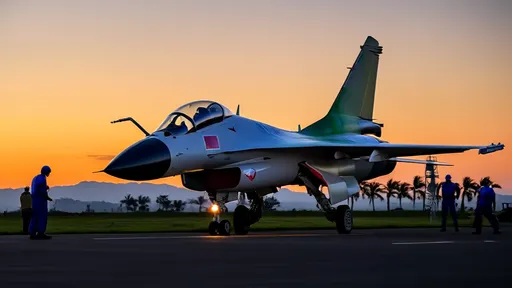
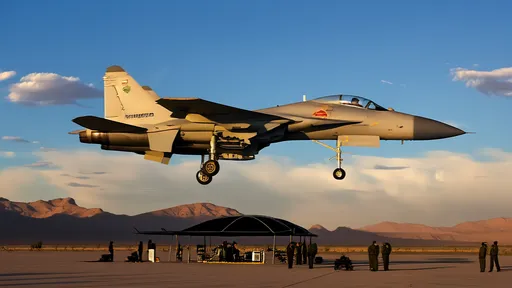
The J-10C, a product of the Chengdu Aircraft Industry Group, is a formidable 4.5-generation fighter. It represents a substantial evolution from the earlier J-10A and J-10B models, primarily due to its incorporation of an active electronically scanned array (AESA) radar. This advanced radar system provides superior tracking and engagement capabilities against multiple targets in complex electronic warfare environments. Furthermore, the aircraft is powered by a Chinese WS-10B Taihang turbofan engine, a critical milestone in achieving propulsion self-sufficiency. Its combat prowess is significantly enhanced by its ability to deploy a wide array of modern munitions, most notably the PL-15 beyond-visual-range air-to-air missile, which is considered one of the most capable of its kind in the world.
For Bangladesh, the interest in the J-10C is driven by a pressing need to modernize its aging fleet. The Bangladesh Air Force (BAF) currently relies on a mix of Russian MiG-29s and Chinese F-7s (a variant of the MiG-21). While the MiG-29s are relatively capable, their maintenance is costly and their technology is becoming dated. The F-7s are decidedly obsolete in a modern air combat scenario. The acquisition of a squadron of J-10Cs would provide the BAF with a quantum leap in capability, offering a credible deterrent and the ability to effectively patrol its airspace and maritime boundaries. This is particularly crucial in the context of regional security dynamics and the ongoing modernization of neighboring air forces. The J-10C's operational cost and China's willingness to offer favorable financial terms make it an attractive option compared to Western alternatives like the Dassault Rafale or the Eurofighter Typhoon, which come with hefty price tags and potential political strings attached.
Egypt's potential procurement tells a more complex strategic story. The Egyptian Air Force (EAF) is one of the most powerful in the region, operating a diverse fleet that includes American F-16s, French Rafales, and Russian MiG-29Ms. Traditionally, Cairo has maintained a careful balancing act between global powers, sourcing its military hardware from both the West and the East. However, congressional holds in the United States, often linked to human rights concerns, have periodically delayed or complicated American arms sales to Egypt. This inconsistency has pushed Cairo to diversify its sources of advanced weaponry to ensure its military readiness is not held hostage by foreign political whims. The J-10C offers Egypt a high-performance, technologically advanced platform free from such political conditionalities. Integrating the J-10C would not only add another layer of capability but also grant Egypt greater strategic autonomy, reducing its over-reliance on any single supplier and strengthening its hand in negotiations with traditional partners.
The geopolitical ramifications of these potential deals are profound. For China, securing exports of the J-10C to established American defense partners like Egypt would be a landmark achievement. It would signal that Chinese combat aircraft are now competitive in the high-end market and that Beijing is a reliable strategic partner, even for nations within the traditional sphere of influence of the United States. This challenges the long-standing dominance of the "Big Three" in the global arms bazaar. A successful sale to Bangladesh would further cement China's position as the primary defense supplier for South Asia, following its successful exports of JF-17 fighters to Pakistan and Myanmar. It demonstrates a strategic depth and an ability to provide a full spectrum of military hardware, from light fighters to advanced multirole aircraft.
From a technological and industrial perspective, the J-10C's appeal lies in its competitive performance and China's flexible sales approach. Unlike Western fighters, which are often sold with stringent end-user agreements and restrictions on technology transfer, China is known to offer more lenient terms, including potential co-production or technology sharing agreements. This is an immensely attractive proposition for countries like Bangladesh and Egypt, which seek not only to acquire advanced hardware but also to build up their own domestic defense industrial bases. The ability to locally maintain, and perhaps even partially assemble, such advanced aircraft is a significant strategic advantage that goes beyond mere procurement.
However, the path to finalizing these deals is not without its challenges. Both Bangladesh and Egypt will have to consider the logistical complexities of integrating a new, Chinese-origin platform into fleets that are largely composed of Western and Russian aircraft. The establishment of new maintenance, repair, and overhaul (MRO) facilities, the training of pilots and ground crews, and the creation of a dedicated supply chain for spare parts represent significant long-term investments and commitments. Furthermore, while China has made great strides in aviation technology, some potential customers may still harbor perceptions about the relative maturity and combat-proven status of its systems compared to their Western counterparts, despite the J-10C's impressive specifications.
In conclusion, the expressed interest from Dhaka and Cairo in the J-10C Vigorous Dragon is far more than a simple arms purchase. It is a clear indicator of the ongoing geopolitical re-alignment and the erosion of traditional arms market monopolies. For Bangladesh, it is a pragmatic choice for achieving credible air power in a cost-effective manner. For Egypt, it is a strategic maneuver to ensure its military sovereignty and diversify its political risk. For China, it is the ultimate validation of its decades-long investment in indigenous defense technology and a powerful statement of its arrival as a first-tier arms exporter. The outcome of these negotiations will be closely watched in capitals around the world, as it will undoubtedly shape the future landscape of international defense cooperation and strategic alliances for years to come.

By /Oct 21, 2025

By /Oct 20, 2025

By /Oct 20, 2025
By /Oct 21, 2025

By /Oct 20, 2025

By /Oct 21, 2025

By /Oct 21, 2025

By /Oct 21, 2025

By William Miller/Oct 20, 2025

By /Oct 21, 2025
By /Oct 21, 2025

By /Oct 20, 2025

By /Oct 20, 2025

By /Oct 21, 2025

By /Oct 20, 2025
By /Oct 21, 2025

By Joshua Howard/Oct 20, 2025

By /Oct 21, 2025
By /Oct 21, 2025

By /Oct 20, 2025