Outlook on Key Technologies for 5G-Advanced: Integrated Sensing and AI-Native

Aug 26, 2025 By

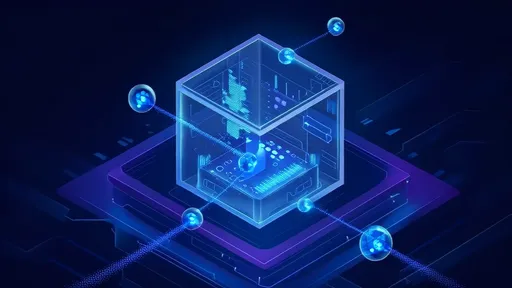
The evolution of 5G technology continues to redefine connectivity, and the emergence of 5G-Advanced marks a pivotal shift toward more integrated and intelligent networks. Among the key technological prospects, the fusion of communication and sensing—often termed integrated sensing and communication (ISAC)—along with the native integration of artificial intelligence, stands out as a transformative force. These advancements are not merely incremental improvements but represent a fundamental rethinking of how networks operate, interact with the environment, and serve diverse applications.

Integrated sensing and communication is poised to blur the lines between traditional wireless functions. In conventional systems, communication and sensing operate in silos, often competing for spectrum and resources. However, 5G-Advanced envisions a harmonious coexistence where the same infrastructure and signals can simultaneously enable high-speed data transmission and precise environmental awareness. This synergy unlocks unprecedented possibilities: networks can now perceive their surroundings, detect objects, measure distances, and even track movements without relying on separate sensor systems. The implications span across autonomous vehicles, smart cities, industrial automation, and public safety, creating a more responsive and context-aware digital ecosystem.

At the heart of this integration lies the efficient use of millimeter-wave and sub-terahertz frequencies, which offer abundant bandwidth for both high-throughput communication and high-resolution sensing. Advanced beamforming and massive MIMO technologies enhance directional accuracy, allowing networks to "see" and communicate with pinpoint precision. Moreover, waveform design and signal processing techniques are evolving to support dual purposes—minimizing interference while maximizing information extraction. This not only optimizes resource utilization but also paves the way for innovative services like real-time spatial mapping and gesture-based controls, transforming how humans and machines interact with the network.

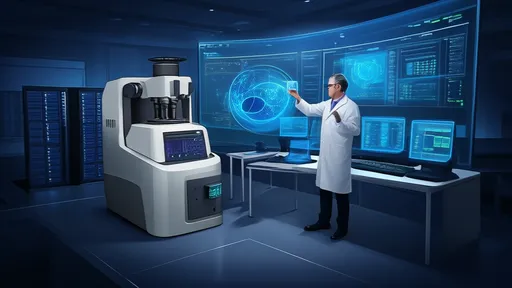
Parallel to the rise of ISAC, the native embedding of artificial intelligence into 5G-Advanced architectures is reshaping network intelligence from the ground up. Unlike earlier approaches where AI was bolted on as an afterthought, AI-native design ensures that machine learning and data-driven decision-making are intrinsic to the network's operation. This means every layer—from the physical infrastructure to the application services—is infused with adaptive, self-optimizing capabilities. AI algorithms continuously analyze network conditions, traffic patterns, and user behaviors to dynamically allocate resources, predict failures, and enhance security, all in real time.

The benefits of AI-native integration are profound. Networks become more autonomous, capable of self-healing and self-configuration with minimal human intervention. For instance, AI can predict congestion hotspots and proactively reroute traffic, ensuring seamless connectivity even in densely populated areas. In tandem with ISAC, AI can process sensing data to interpret environmental contexts—such as identifying obstacles for autonomous drones or optimizing energy usage in smart buildings. This combination not only boosts efficiency but also enables personalized experiences, where the network adapts to individual user needs without explicit commands.

Furthermore, the marriage of AI and 5G-Advanced accelerates innovation in edge computing and distributed intelligence. By processing data closer to the source—whether from sensors, devices, or users—latency is drastically reduced, making mission-critical applications like remote surgery or augmented reality more feasible. AI models deployed at the edge can learn from local data streams, improving accuracy and responsiveness while preserving privacy. This decentralized approach aligns perfectly with the scalable, flexible nature of 5G-Advanced, fostering an ecosystem where intelligence is pervasive yet contextually aware.

As these technologies mature, they also address longstanding challenges in network sustainability and inclusivity. ISAC reduces the need for redundant hardware by combining functions, lowering energy consumption and material waste. AI-driven optimization further cuts power usage through smart sleep modes and efficient routing. Moreover, the enhanced sensing capabilities can support applications in rural or underserved areas, such as environmental monitoring or disaster response, bridging digital divides. The holistic design of 5G-Advanced thus not only pushes technological boundaries but also promotes greener, more equitable connectivity.

In conclusion, the journey toward 5G-Advanced is characterized by a deeper convergence of communication, sensing, and artificial intelligence. These elements are not standalone features but interwoven threads that create a smarter, more perceptive network fabric. As industries and societies increasingly rely on real-time data and automation, the advancements in ISAC and AI-native design will serve as the bedrock for next-generation innovations. The future of connectivity is not just about faster speeds—it's about networks that understand, adapt, and empower in ways previously unimaginable.

Recommend Posts
IT

Machine Learning Methods for Data Quality Management: Automatic Detection and Repair of Anomalies

By /Aug 26, 2025

In the rapidly evolving landscape of data-driven decision-making, the integrity of data has become paramount. Organizations across industries are increasingly relying on machine learning to not only derive insights but also to ensure the quality of the data feeding these sophisticated models. The automation of anomaly detection and repair represents a significant leap forward, moving beyond traditional manual methods to more efficient, scalable solutions.
IT

Outlook on Key Technologies for 5G-Advanced: Integrated Sensing and AI-Native

By /Aug 26, 2025

The evolution of 5G technology continues to redefine connectivity, and the emergence of 5G-Advanced marks a pivotal shift toward more integrated and intelligent networks. Among the key technological prospects, the fusion of communication and sensing—often termed integrated sensing and communication (ISAC)—along with the native integration of artificial intelligence, stands out as a transformative force. These advancements are not merely incremental improvements but represent a fundamental rethinking of how networks operate, interact with the environment, and serve diverse applications.
IT

Secure Storage and Privacy Protection Schemes for Biometric Data

By /Aug 26, 2025

The rapid proliferation of biometric authentication systems has ushered in an era of unprecedented convenience and security across industries. From unlocking smartphones with a glance to accessing high-security facilities through iris scans, biometric data has become the cornerstone of modern identity verification. However, this technological advancement brings with it profound challenges related to data security and individual privacy. Unlike passwords or tokens, biometric characteristics are inherently inseparable from their owners—they cannot be changed if compromised. This immutable nature elevates the stakes for protecting such sensitive information against unauthorized access and misuse.
IT

IoT Device Security Hardening Guide: From Hardware to Firmware

By /Aug 26, 2025

In the rapidly expanding universe of connected devices, the security of Internet of Things (IoT) ecosystems has emerged as a critical frontier for developers, manufacturers, and end-users alike. The journey toward robust IoT security is not a single step but a comprehensive process that begins at the most fundamental level: the hardware. A secure hardware foundation is indispensable; without it, no amount of software or network security can fully compensate for inherent vulnerabilities. This involves selecting microcontrollers and processors with built-in security features such as hardware-based cryptographic accelerators, secure boot capabilities, and trusted execution environments. These components create a root of trust, a secure starting point that ensures only authenticated code can execute, thereby preventing unauthorized firmware from running on the device.
IT

Defending Against Software Supply Chain Attacks

By /Aug 26, 2025

In recent years, the technology landscape has witnessed a dramatic surge in software supply chain attacks, a sophisticated form of cyber assault that targets not just individual applications but the entire ecosystem of development, distribution, and deployment. These attacks exploit the interconnected nature of modern software development, where third-party components, open-source libraries, and external services are seamlessly integrated into applications. The repercussions are far-reaching, compromising the integrity, security, and trust of software upon which businesses and consumers rely. As these threats evolve in complexity and scale, organizations must adopt a proactive and multi-layered defense strategy to safeguard their software supply chains.
IT

Progress in the Practical Application of Homomorphic Encryption: Performing Computations on Encrypted Data

By /Aug 26, 2025

In the rapidly evolving landscape of data security, homomorphic encryption has long been heralded as the holy grail—a cryptographic method that allows computations to be performed directly on encrypted data without ever needing to decrypt it. For years, it remained a theoretical marvel, confined to academic papers and considered computationally impractical for real-world applications. However, recent strides in algorithmic efficiency, hardware acceleration, and cloud infrastructure have thrust homomorphic encryption into the realm of practicality, promising to revolutionize how we handle sensitive data in an increasingly interconnected digital ecosystem.
IT

The Development and Challenges of Deepfake Detection Technology

By /Aug 26, 2025

The digital landscape is currently navigating the treacherous waters of deepfake technology, a double-edged sword that offers both innovative potential and unprecedented threats. As synthetic media generated by artificial intelligence becomes increasingly sophisticated, the race to develop effective detection mechanisms has intensified, becoming a critical frontier in the battle for information integrity. This technological arms race pits creators against detectors in a complex dance of advancement and countermeasure, with high stakes for security, privacy, and truth itself.
IT

Practical Cases of Graph Databases in Anti-Fraud and Knowledge Graphs

By /Aug 26, 2025

The financial industry's battle against fraud has entered a new technological frontier, moving decisively beyond traditional rule-based systems and siloed data analysis. In this high-stakes environment, graph databases have emerged not merely as a tool, but as a foundational technology reshaping how institutions understand and combat sophisticated fraudulent networks. The inherent structure of graph technology, which focuses on the relationships between entities—be they people, transactions, devices, or locations—provides a uniquely powerful lens through which to detect patterns that would otherwise remain invisible in rows and columns of traditional databases.
IT

Automated Sharing and Application of Cyber Threat Intelligence (CTI)

By /Aug 26, 2025

The landscape of cyber threats continues to evolve at an unprecedented pace, compelling organizations to seek more dynamic and responsive defense mechanisms. In this context, the automation of cyber threat intelligence (CTI) sharing and application has emerged as a critical frontier in cybersecurity strategy. No longer can enterprises rely solely on manual processes; the volume, velocity, and variety of threats demand a paradigm shift toward integrated, machine-speed solutions. This transformation is not merely about adopting new tools but represents a fundamental rethinking of how intelligence is curated, disseminated, and operationalized across digital ecosystems.
IT

Cryptographic Agility: Preparing for the Post-Quantum Era

By /Aug 26, 2025

In the ever-evolving landscape of digital security, the concept of cryptographic agility has emerged as a cornerstone for future-proofing our digital infrastructure. As we stand on the brink of the quantum computing era, the need for adaptable cryptographic systems has never been more urgent. Quantum computers, with their potential to break widely used encryption algorithms like RSA and ECC, pose a significant threat to the confidentiality and integrity of data worldwide. Organizations and governments are now racing to develop and deploy quantum-resistant cryptographic solutions, but the transition is fraught with challenges. Cryptographic agility offers a pathway to navigate this complex transition smoothly, ensuring that systems can evolve without requiring complete overhauls every time a new threat emerges.
IT

Distributed Cloud: Extending Cloud Capabilities to Edge and Local Data Centers

By /Aug 26, 2025

The cloud computing landscape is undergoing a profound transformation, shifting from a centralized model to a more dispersed and context-aware architecture. This evolution, broadly termed Distributed Cloud, represents a strategic reimagining of how and where computing resources are deployed and managed. It moves beyond the traditional hyperscale data center model, pushing cloud capabilities—compute, storage, networking, and services—out to the physical edge of the network and into local data centers. This is not merely an incremental improvement but a fundamental change in the paradigm of cloud delivery, promising to address the growing demands for low latency, data sovereignty, and localized processing that the conventional cloud struggles to satisfy.
IT

The Rise of Ransomware-as-a-Service (RaaS) and Countermeasures

By /Aug 26, 2025

The digital underworld has birthed a formidable new business model that is reshaping the cyber threat landscape: Ransomware-as-a-Service. What began as a specialized criminal endeavor requiring technical expertise has evolved into a commodified threat accessible to anyone with malicious intent and an internet connection. The emergence of RaaS platforms represents one of the most significant developments in cybercrime over the past decade, fundamentally altering how attacks are orchestrated and who can execute them.
IT

Application of Time-Series Databases in Predictive Maintenance for Industrial Internet of Things

By /Aug 26, 2025

In the rapidly evolving landscape of industrial operations, the integration of the Industrial Internet of Things (IIoT) has become a cornerstone for achieving unprecedented levels of efficiency and reliability. Among the myriad technologies enabling this transformation, time-series databases have emerged as a critical component, particularly in the realm of predictive maintenance. These specialized databases are engineered to handle the immense volumes of time-stamped data generated by sensors and machinery, providing the foundation for advanced analytics that can foresee equipment failures before they occur, thereby minimizing downtime and reducing operational costs.
IT

Automated Response Practices in Security Operations Center (SOC)

By /Aug 26, 2025

In the ever-evolving landscape of cybersecurity, Security Operations Centers (SOCs) are increasingly turning to automation to enhance their defensive capabilities. The integration of Security Orchestration, Automation, and Response (SOAR) platforms has emerged as a transformative practice, enabling organizations to respond to threats with unprecedented speed and precision. As cyber threats grow in sophistication and volume, the traditional manual approaches to incident response are proving inadequate. SOAR addresses this gap by streamlining processes, reducing human error, and allowing security teams to focus on strategic tasks rather than repetitive, time-consuming actions.
IT

New Comparison of Real-Time Data Stream Processing Engines: Flink vs. Spark Streaming

By /Aug 26, 2025

In the rapidly evolving landscape of real-time data processing, two engines have consistently dominated conversations among data engineers and architects: Apache Flink and Apache Spark Streaming. While both frameworks offer powerful capabilities for handling streaming data, their underlying philosophies, performance characteristics, and suitability for different use cases continue to spark intense debate within the tech community. As organizations increasingly rely on real-time insights to drive decision-making, understanding the nuances between these platforms becomes critical.
IT

Maturity Assessment of Lakehouse Architecture

By /Aug 26, 2025

The evolution of data management has entered a new phase with the emergence of the Lakehouse architecture, a paradigm that seeks to unify the best aspects of data lakes and data warehouses. As organizations increasingly adopt this hybrid approach, the need to evaluate its maturity becomes paramount. A maturity assessment framework for Lakehouse architecture provides a structured way to gauge how well an organization is leveraging this model to drive value, ensure scalability, and maintain robustness in its data operations.
IT

Green Computing in Big Data Clusters: Technologies and Practices for Reducing Energy Consumption

By /Aug 26, 2025

As global data consumption continues its exponential rise, the environmental footprint of massive data centers and computing clusters has become impossible to ignore. The push toward green computing in big data environments is no longer a niche concern but a central operational and ethical imperative for organizations worldwide. The convergence of technological innovation, economic pressure, and regulatory frameworks is driving a profound shift in how we power, cool, and manage the engines of our digital world.
IT

Automating Data Governance: AI for Discovering, Classifying, and Tagging Sensitive Data

By /Aug 26, 2025

In the rapidly evolving digital landscape, organizations are grappling with an unprecedented deluge of data. Amidst this data explosion, the protection of sensitive information has emerged as a critical priority. Regulatory frameworks such as GDPR, CCPA, and HIPAA have imposed stringent requirements, making robust data governance not just a best practice but a legal necessity. Traditional methods of data classification and protection, often manual and rule-based, are proving inadequate to handle the scale and complexity of modern data environments. They are slow, error-prone, and incapable of adapting to new types of sensitive data or evolving threats. This gap has catalyzed the emergence of a transformative solution: the automation of data governance through artificial intelligence.
IT

Enhanced Analytics: Empowering Business Users with Self-Service Data Insights

By /Aug 26, 2025

The landscape of business intelligence is undergoing a profound transformation, driven by the emergence of augmented analytics. This evolution marks a significant departure from traditional data analysis methods, which often required specialized technical skills and created bottlenecks between data teams and business users. Augmented analytics leverages artificial intelligence and machine learning to automate data preparation, insight generation, and explanation, fundamentally changing how organizations derive value from their data assets.
IT

Common Pitfalls and Key Success Factors in Data Midend Construction

By /Aug 26, 2025

In the rapidly evolving landscape of digital transformation, enterprises are increasingly turning to data mid-platforms as a cornerstone for harnessing the power of their information assets. These platforms promise to break down data silos, enhance analytics capabilities, and drive innovation. However, the journey toward building an effective data mid-platform is fraught with challenges that can derail even the most well-intentioned initiatives. Understanding both the common pitfalls and the critical success factors is essential for organizations aiming to leverage their data for competitive advantage.